


sed do eiusmod tempor incididunt ut labore et dolore magna aliqua.
newsletter occaecati cupiditate notings
Book Series
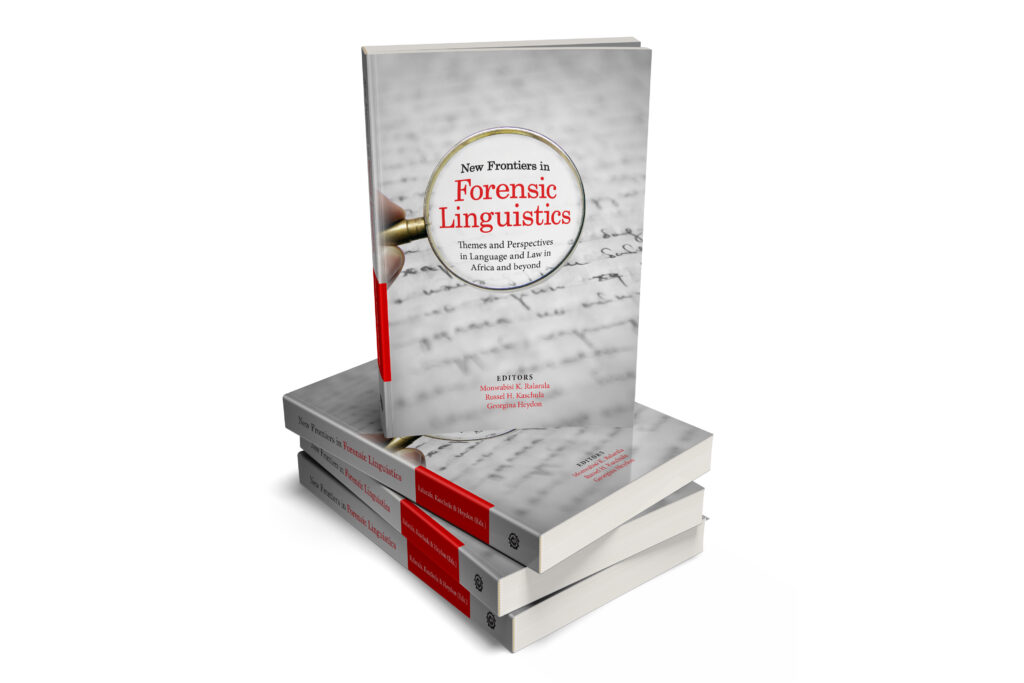
The field of forensic linguistics is a niche area that has not enjoyed much participation from the African continent. The theme of language and the law in this book is one that straddles two important aspects of the legal history of South Africa in particular, and how it has impacted on the country’s legal and education systems. The field of forensic linguistics is a niche area that has not enjoyed much participation from the African continent. The theme of language and the law in this book is one that straddles two important aspects of the legal history of South Africa in particular, and how it has impacted on the country’s legal and education systems. The declaration, by the United Nations, of 2019 as ‘The International Year of Indigenous Languages’ is opportune, not only for the launch of this book, but for what its research content tells us of the strides taken in ensuring access to justice for all citizens of the world in a language they understand.
The contributions by authors in this book tell the story of many African citizens, and those hailing from beyond our borders, who straddle the challenges of linguistic and legal pluralism in courtrooms across their respective countries. It is our hope that the contributions made in this book will assist in ensuring human rights become a reality for global citizens where indigenous voices have not been heard; and that these citizens will be free to give their testimonies in a language of their choice, and that they may be heard and understood.
The field of forensic linguistics is a niche area that has not enjoyed much participation from the African continent. The theme of language and the law in this book is one that straddles two important aspects of the legal history of South Africa in particular, and how it has impacted on the country’s legal and education systems. The field of forensic linguistics is a niche area that has not enjoyed much participation from the African continent. The theme of language and the law in this book is one that straddles two important aspects of the legal history of South Africa in particular, and how it has impacted on the country’s legal and education systems. The declaration, by the United Nations, of 2019 as ‘The International Year of Indigenous Languages’ is opportune, not only for the launch of this book, but for what its research content tells us of the strides taken in ensuring access to justice for all citizens of the world in a language they understand.
The contributions by authors in this book tell the story of many African citizens, and those hailing from beyond our borders, who straddle the challenges of linguistic and legal pluralism in courtrooms across their respective countries. It is our hope that the contributions made in this book will assist in ensuring human rights become a reality for global citizens where indigenous voices have not been heard; and that these citizens will be free to give their testimonies in a language of their choice, and that they may be heard and understood.

A handbook on Legal Languages and the quest for linguistic equality in South Africa and beyond is an interdisciplinary publication in forensic linguistics/ language and law. This handbook includes comparative African and global case studies on the use of language(s) in courtroom discourse and higher education institutions: in Kenya; Morocco; Nigeria; Australia; Belgium, Canada and India. These African and global case studies form the backdrop for the critique of the monolingual English language of record policy for South African courts, the core of this handbook discussed case law and the beleaguered legal interpretation profession. This handbook argues that
A handbook on Legal Languages and the quest for linguistic equality in South Africa and beyond is an interdisciplinary publication in forensic linguistics/ language and law. This handbook includes comparative African and global case studies on the use of language(s) in courtroom discourse and higher education institutions: in Kenya; Morocco; Nigeria; Australia; Belgium, Canada and India. These African and global case studies form the backdrop for the critique of the monolingual English language of record policy for South African courts, the core of this handbook discussed case law and the beleaguered legal interpretation profession. This handbook argues that

Language and the Law: Global Perspectives in Forensic Linguistics from Africa and beyond is the third volume in a series of books designed to contribute and respond to growing interest in forensic linguistics or language and the law on the African continent. Drawing mostly on contexts where traditional African laws and Western laws are practised side-by-side, and where there are discontinuities between local knowledge systems, belief systems and language practices on the one hand, and official languages of law discourse, conceptualisation and jurisprudence documentation on the other, the chapters in this volume problematise, among other issues, the mediation practices (or lack thereof) of language and legal processes, discourse strategies and complexities in (mis)interpretations in second language court contexts and the miscarriage of justice that these may entail.
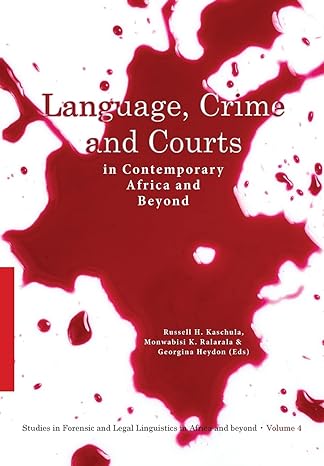
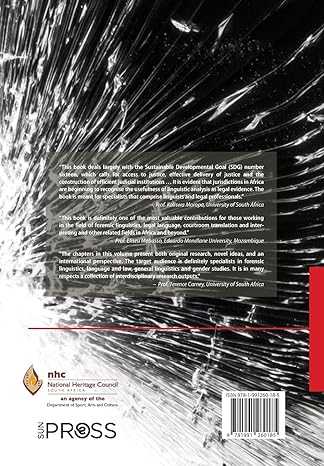
The research represented in this volume, and in the series as a whole, is intended to provide critical analyses and findings that can underpin the development of language policies, practice guides and other resources that support a fair and accessible legal system. However, this will also require well-developed teaching and research programmes, so we intend that this volume will continue to support the growth of forensic linguistics in Southern African universities and nurture the next generation of scholars dedicated to forensic and legal linguistics. This aim will be supported by the newly formed African Association of Forensic and Legal Linguists (AAFLL), which will help to coordinate the study of forensic linguistics in Africa. This book series, Studies in Forensic and Legal Linguistics in Africa and Beyond, Volumes I, II, III and IV, continues to play an important role in bringing African forensic linguistic scholarship to a wider audience, while simultaneously promoting the field amongst academic and legal institutions in Africa.